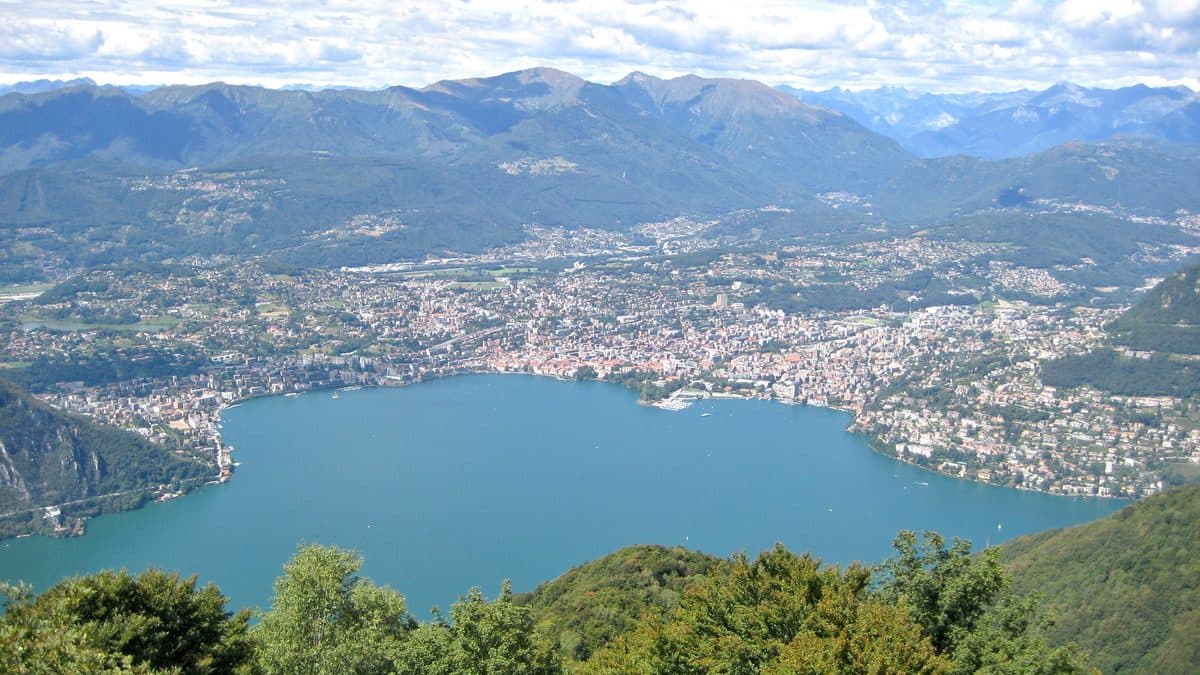
Lake, palm trees, hilltop villages and dolce vita: discover what to do in Lugano and Ticino, the must-sees, day trips and our tips for your stay.
South of the Alps, Ticino is Italian-speaking Switzerland: palm trees, sparkling lakes, arcaded squares and a Mediterranean way of life. Its main city, Lugano, blends lakeside charm with Italian flair. This guide gathers what to do in Lugano and Ticino, the must-sees and our day-trip ideas.
The must-sees of Lugano and Ticino
- Lake Lugano: cruises, walks along the quays and swimming.
- Monte San Salvatore and Monte Brè: 360° panoramas reachable by funicular.
- Morcote: one of the most beautiful villages in Switzerland, right by the water.
- Bellinzona: its three medieval castles, a UNESCO World Heritage site.
- Locarno and Ascona: on Lake Maggiore, Mediterranean gentleness.
Lugano, pearl of the lake
Lugano spreads its Italian old town around the Piazza della Riforma, with shopping lanes and fresco-adorned churches (Santa Maria degli Angioli). The flower-lined quays invite a stroll, and the lakeside parks (Parco Ciani) offer a peaceful break. The funicular leads up to Monte San Salvatore for a spectacular view over the lake and the Alps.
Villages and nature around the lake
Morcote, with its arcades at the water's edge and its staircase up to the church of Santa Maria del Sasso, is a gem. Gandria, a fishing village clinging to the mountain, is reached by boat. Nature lovers will enjoy the San Grato botanical park or a trip up Monte Generoso, reachable by a cogwheel train.
Bellinzona, Locarno and Ascona
Bellinzona, the cantonal capital, is famous for its three castles (Castelgrande, Montebello, Sasso Corbaro), listed as UNESCO World Heritage. Further west, on Lake Maggiore, Locarno charms with its Piazza Grande (which hosts a major film festival) and the Madonna del Sasso sanctuary; Ascona lines up its pastel façades along a sunny promenade.
Where to eat in Ticino?
Ticino cuisine blends Italian influences with local produce: risotto, polenta, cured meats and the famous grotti, traditional taverns serving regional dishes in the shade. To find a good address, explore the dining category, browse businesses by city and book a table via the Reservation page.
Practical tips
Lugano is about two hours by train from Zurich via the Gotthard Base Tunnel. Ticino's mild climate makes it enjoyable for much of the year, with spring and autumn especially pleasant. Funiculars, boats and regional trains conveniently link the sites.
Plan your stay with TOP SUISSE
With TOP SUISSE, find all these businesses right near you: restaurants, grotti and Ticino addresses are easy to discover by browsing the categories or running a search by city. To complete your trip, also read our guides the most beautiful lakes in Switzerland and the most beautiful cities to visit.
Frequently asked questions
What to do in Lugano in one day?
Wander the old town and Piazza della Riforma, walk along the quays and through Parco Ciani, then take the funicular up Monte San Salvatore or Monte Brè for the view. If time allows, board a short cruise to Morcote or Gandria.
Which villages should you visit around Lugano?
Morcote, one of the most beautiful villages in Switzerland, and Gandria, a fishing village reached by boat, are must-sees. Further afield, Bellinzona and its three UNESCO castles are worth the trip.
How do you get to Lugano from Zurich?
The train connects Zurich to Lugano in about two hours via the Gotthard Base Tunnel, with frequent departures. It is the simplest and most comfortable way.
What to eat in Ticino?
Ticino cuisine offers risotto, polenta, cured meats and regional dishes served in the grotti, traditional taverns. Local produce and Ticino wines (Merlot) accompany meals.